

The Experience
Your Daily Agenda
A journey of profound growth and reconnection
A retreat is not a vacation: it is five structured days that move from attunement and understanding your cycle to healing old injuries and trusting again.
Your time will be filled with activities designed to help you go deeper into your emotions and learn how unconscious thoughts and habits affect your ability to connect with your partner. When challenging and uncomfortable feelings come up, you are gently guided through the process of working with them, discovering the valuable insight they have to offer.
What it is
Five days built entirely around your relationship
A retreat is not a vacation. Your time with us is filled with activities designed to help you go deeper into your emotions and learn how your unconscious thoughts and habits negatively affect your ability to connect with your partner. During deep emotional work, challenging and uncomfortable feelings may come up, and you will be gently guided through the process of working with them, helping you discover the valuable insight they have to offer.
During the first three days, individual sessions are added alongside the couples work to address personal trauma, helping each of you process the old programming and trust issues that may be keeping you disconnected from one another. The final two days bring the work back to the two of you together, healing relationship injuries and consolidating your new connection before the intensive completes.
- One couple and one therapist, never a group
- A clear hourly schedule for every day of the retreat
- Individual trauma sessions woven into the couples work
- Experiential investigations, not lectures or discussions
When marriages fail, it is not increasing conflict that is the cause. It is decreasing affection and emotional responsiveness.
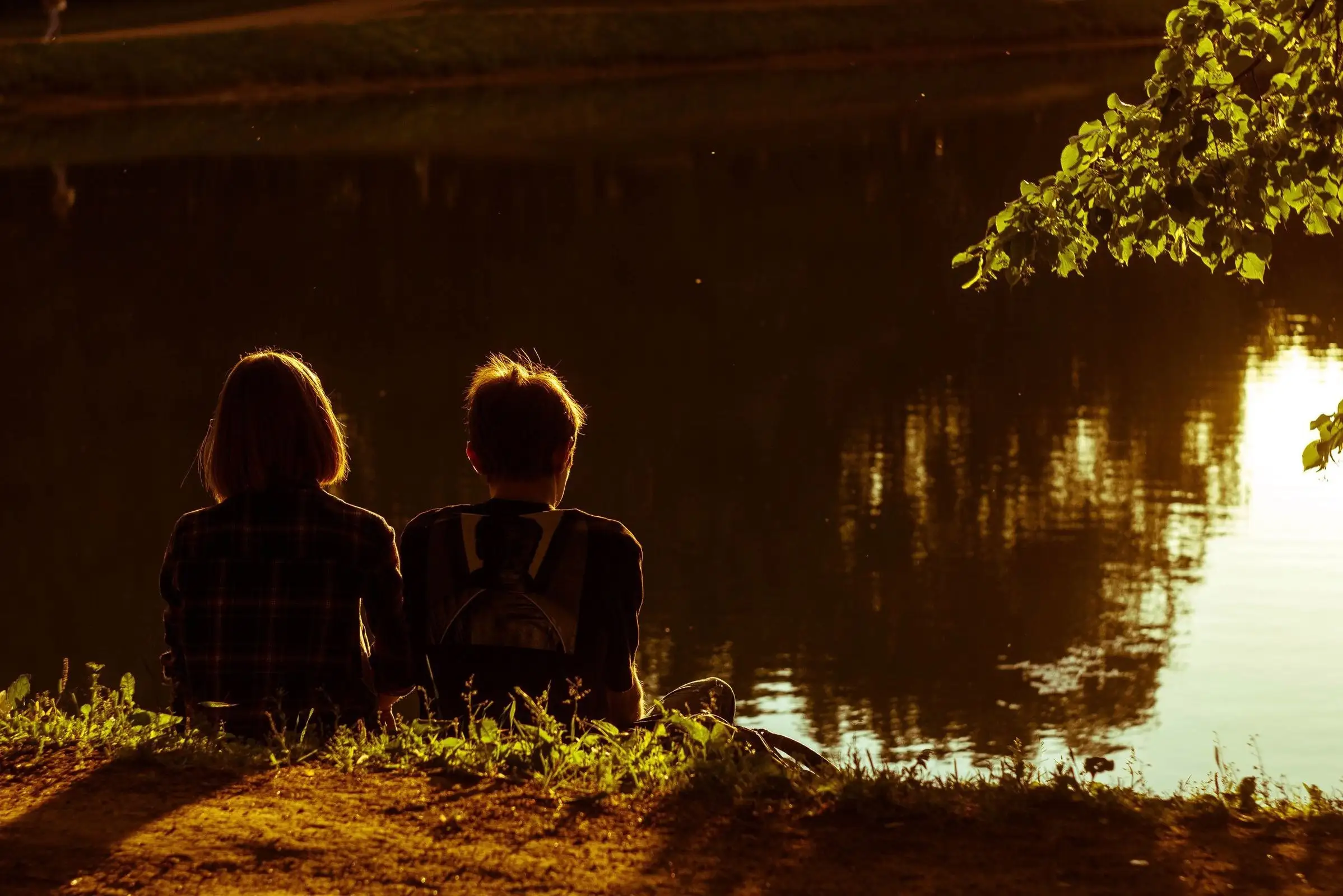
Not a vacation: a structured journey of growth and reconnection.
The arc of your retreat
How the five days unfold
Each day has a theme, and each builds on the one before: from attunement and understanding your cycle, through trust and vulnerability, to forgiveness and completion.
- 01
Day one: Attunement, alignment, and the cycle
Getting acquainted and history taking: personal, family, and couple, including the legacy of family dynamics. You define the problem, set goals, and are introduced to your relationship dynamics and your personal and interpersonal emotion and action cycles. Afternoon individual sessions review your history form and worst things list. Most couples expect the first day to be about telling their story. It is not. It is about building the foundation for real change: clarity, safety, and a new way of understanding yourselves and your relationship. As your Persistent Personal Patterns emerge, many couples reach a turning point and stop seeing each other as the problem and begin to see the cycle as the problem. By the end of the first day, most couples report greater clarity, reduced reactivity, increased understanding of their cycle, and a sense of hope that meaningful change is possible.
- 02
Day two: Patterns of accessibility, responsiveness, and engagement
The work goes deeper into your personal styles of engagement: what triggers you, your raw spots and rocky moments, and your relationship's dance of disconnection, with the fear and longing that go with it. These are experiential investigations with dialogues and enactments, not discussions, and the individual sessions begin processing trauma from your personal and family history.
- 03
Day three: Trust and vulnerability
You reach the edge of really identifying and articulating your cycle and begin to catch yourself going into it. You start the difficult, vulnerable process of putting your wants, needs, and fears on external speaker, experimenting with your developing sense of trust and learning how to create a secure base for action in your relationship.
- 04
Day four: Deeper into accessibility and responsiveness
The morning focuses on the longing versus fear continuum and the 'Please hold me, be there for me' conversation. Can you ask for what you want? Can you respond to your partner's needs? The afternoon moves to extended couples sessions, and if you are ready, you begin looking at past hurts we call relationship injuries.
- 05
Day five: Forgiving injuries and trusting again
With your trust and bond strong enough, you begin healing old relationship injuries: sharing your pain, understanding and responding to your partner's pain, apologizing, and accepting apology. The afternoon puts it all together and consolidates the work before the intensive completes. Can you celebrate your connection? The answer is yes.
A day at the retreat
The shape of a retreat day
Every day follows a clear hourly schedule, so you always know what comes next. Mornings belong to the two of you together; on the first three days, afternoons add individual sessions before the day closes with couples work.
9:00a to 12:00p Three hour couples session
Each day opens with a long, uninterrupted couples session. Day one begins with getting acquainted, history taking, problem definition, and goal setting; each morning after that continues the previous day's work and goes deeper into your cycles, triggers, and emotional truth.
12:00p to 1:30p Lunch break
A real break in the middle of the day. The patterns we learned in our families inform our present thoughts, feelings, and actions, and the pause gives the morning's work room to settle before the afternoon begins.
1:30p to 2:30p Individual session with partner one
Using methodology from EMDR and ImTT, two powerful trauma resolution therapies, your therapist reviews your history form and worst things list: Mom and Dad trauma clusters, attachment injuries, and relationship injuries.
2:30p to 3:30p Individual session with partner two
Your partner has the same private hour, targeting the driven behaviors and feelings that personal and family history, especially trauma, can lock into a relationship.
4:00p to 5:30p Afternoon couples session
The day closes together, integrating and making sense of your personal and interpersonal cycles. Insights from the individual sessions are woven back into the couples work.
Days four and five Couples sessions to completion
The afternoons shift entirely to couples work: a session after lunch, a short break, then a closing session that carries the day's work to completion, focused on healing relationship injuries and consolidating your new connection.
During the first three days, individual sessions run alongside the couples work to address personal trauma, helping each of you process old programming and trust issues that may be keeping you disconnected from one another. On days four and five, the afternoons shift to extended couples sessions that carry the work to completion.
Why it works
Why the structure goes so deep
The agenda is not an itinerary of activities for its own sake. Every block of the day has a job, and the order matters: connection first, individual trauma work inside it, and integration before each day ends.
-
The foundation
Emotion and meaning
The work is oriented around feelings, emotions, and behavior, and the internal dialogues we hold about ourselves, each other, and the world. In this model, what erodes a marriage is not increasing conflict but decreasing affection and emotional responsiveness, so that is where the work aims.
-
Days one through three
Individual work inside couples work
The psychological and emotional patterns we learned in our families inform our present thoughts, feelings, and actions, and when our history includes trauma we can feel even more driven and trapped in our patterns. Individual sessions target those driven behaviors using methodology from EMDR and ImTT, and their insights are integrated in the afternoon couples session.
-
How sessions run
Experiential, not lecture
These are not discussions. They are experiential investigations, including dialogues, interactions, and enactments, so new patterns are practiced in the room rather than talked about in the abstract.
Our goal is to have you de-escalated, regulated, talking to, and trusting each other, with a clear awareness of your cycles and triggers: what Emotionally Focused Therapy calls the beginning of stage two. Most couples continue with a regular weekly or bi-weekly therapist afterward for further work and support.

Day by day, the dance of disconnection loses its grip.
Why an intensive
What five structured days can give you
-
Improved communication skills
Learn effective ways to express your thoughts and feelings, and to understand your partner better.
-
Deeper emotional connection
Strengthen the emotional bond between you and your partner, fostering a more intimate relationship.
-
Increased trust and intimacy
Build a foundation of trust and enhance your physical and emotional intimacy.
-
Healthy conflict resolution
Develop strategies to manage and resolve conflicts in a constructive manner.
-
A renewed sense of commitment and love
Reignite the passion and commitment in your relationship, leaving the retreat with a renewed sense of love.
Formats we offer
- In person
Held in a curated selection of private, fully furnished locations in downtown Northampton, completely private and within walking distance of shops and amenities.
- Online
Conducted over Zoom from the comfort and security of your own home. You need a quiet, secure space free of interruption; many choose this to avoid travel.
- Couples intensive
3 to 5 days of one couple, one therapist work, combining couples sessions with individual break-out sessions.
- Individual intensive
Available before or after a couples intensive, designed to work with your present and past trauma and neglect.
Is it right for you?
A retreat may be a good fit if you
Every couple is unique, and we have found that all kinds of problems can be healed, no matter how drastic, provided both partners are motivated to do the work. Couples come to us when they:
- Are contemplating divorce and need to address core issues now, not over months of weekly sessions
- Are working through an affair, newly discovered or never properly healed
- Are struggling with emotional and sexual intimacy
- Feel more like roommates than partners after years of putting everything else first
- Are facing a mid-life crisis or a major life change, or want to fine tune your connection before marriage
Common questions
Your retreat days, answered
What does a day at a couples retreat look like?
Each retreat day opens with a three hour couples session from 9:00 to 12:00, followed by a lunch break until 1:30. On the first three days, each partner then has a private individual session, one from 1:30 to 2:30 and one from 2:30 to 3:30, before the day closes with an afternoon couples session from 4:00 to 5:30 that integrates everything that surfaced.
How many hours of therapy happen each day at the retreat?
Roughly six hours of structured work each day: a three hour couples session every morning, two hours of individual sessions on days one through three, and a closing afternoon couples session, with a full lunch break from 12:00 to 1:30 and other breaks whenever you need them. Across 3 to 5 days that adds up to about 30 hours of focused therapy.
What happens on the first day of a couples retreat?
Day one is about attunement, alignment, and the cycle. The morning covers getting acquainted and history taking, personal, family, and couple, including the legacy of family dynamics; you define the problem, set goals, and are introduced to your personal and interpersonal emotion and action cycles. In the afternoon, individual sessions review each partner's history form and worst things list.
What happens on days two and three of a couples retreat?
Day two goes deeper into your personal styles of engagement: what triggers you, your raw spots and rocky moments, and your relationship's dance of disconnection, with the fear and longing that go with it. Day three is about trust and vulnerability: you begin to catch yourself going into your cycle and start the difficult process of putting your wants, needs, and fears on external speaker.
What happens on the last two days of a couples retreat?
Days four and five shift the afternoons entirely to couples work. Day four focuses on the longing versus fear continuum and the 'Please hold me, be there for me' conversation, and if you are ready, you begin looking at past hurts we call relationship injuries. Day five is forgiving injuries and trusting again: sharing pain, apologizing, accepting apology, and consolidating your new connection.
What happens in the individual sessions at a couples retreat?
Using methodology from EMDR and ImTT, two powerful trauma resolution therapies, your therapist reviews your history form and worst things list: Mom and Dad trauma clusters, attachment injuries, and relationship injuries. The sessions target the driven behaviors and feelings that personal and family history, especially trauma, can lock into a relationship, and their insights are woven back into the afternoon couples work.
Are individual sessions held every day of the retreat?
No, individual sessions run on the first three days only, one private hour for each partner every afternoon. They address the personal trauma, old programming, and trust issues that may be keeping you disconnected from one another. On days four and five the afternoons shift to extended couples sessions that heal relationship injuries and carry the work to completion.
Is a couples therapy retreat like a vacation?
No, a retreat is not a vacation. Your time is filled with activities designed to help you go deeper into your emotions and learn how unconscious thoughts and habits affect your ability to connect with your partner. When challenging and uncomfortable feelings come up, you are gently guided through working with them. The pace is structured but humane, with a real lunch break and breaks whenever you need them.
Are retreat sessions lectures or discussions?
Neither. The sessions are experiential investigations, including dialogues, interactions, and enactments, so new patterns are practiced in the room rather than talked about in the abstract. The work is oriented around feelings, emotions, and behavior, and the internal dialogues we hold about ourselves, each other, and the world.
Why is the retreat day structured in that order?
Every block of the day has a job, and the order matters: connection first, individual trauma work inside it, and integration before each day ends. The morning couples session builds depth, the lunch break gives that work room to settle, the individual sessions process what each partner carries in, and the afternoon session makes sense of it together. A clear agenda also means you always know what comes next.
How does each retreat day end?
Every day closes with the two of you together. The afternoon couples session integrates and makes sense of your personal and interpersonal cycles, weaving insights from the individual sessions back into the couples work so nothing from the day is left hanging. On days four and five, a closing session carries the day's work to completion.
What is the goal by the end of a five day retreat?
The goal is to have you de-escalated, regulated, talking to, and trusting each other, with a clear awareness of your cycles and triggers: what Emotionally Focused Therapy calls the beginning of stage two. By day five your trust and bond are strong enough to begin healing old relationship injuries, and the final afternoon puts it all together and consolidates the work before the intensive completes.
The methods we use
What shapes each day's work
- EFT Emotionally Focused Therapy The empirically validated model of adult bonding developed by Sue Johnson. Our couples retreats draw heavily on the EFT-informed Hold Me Tight workshop, which Ross taught for several years. Learn more
- EMDR Eye Movement Desensitization and Reprocessing A modality created by Francine Shapiro that heals the distress left by trauma. We use it in the individual sessions to rapidly process old trauma that keeps couples distant and distrusting. Learn more
- ImTT Image Transformation Therapy A trauma resolution approach Ross studied for over a decade, used alongside EMDR in individual break-out sessions to process stuck trauma from negative past experiences. Learn more
Ready to plan your retreat?
Speak to a therapist about your situation and how the retreat would unfold for the two of you. We provide a free consultation with no obligation, so you can ask as many questions as you like.